
Whether you’re planning on planting a tree in the garden to grow alongside your family or doing ecological work on a larger scale, you’ll need to understand the basic process before diving right in. Though it seems simple, planting trees requires serious planning, and without the right know-how, you might cause more harm than good.
So, first things first, how do I plant a tree?
The quick-and-easy steps to planting a tree are:
- Dig a hole
- Soak the rootball
- Place the tree into the hole
- Cover the rootball, then water
- Add a supporting stake, and optionally a tree guard or spiral
Keep reading to find out the detailed steps to planting a tree, and what time of year is best for planting.
What You Need to Plant a Tree
You need to be prepared when planning to plant a tree in the UK. Most common gardening tools will be useful for tree planting. You will need:
- A tree, either bare-root or containerised
- Spade and fork
- Watering can
- Mulch (such as chipped bark)
- Sturdy stake
- Mallet and tree tie
- Optional tree guard or spiral
Choosing a Type of Tree to Plant
You should choose a non-invasive tree species when planting in your garden to ensure your property isn’t put at risk of damage. Trees that are relatively safe to plant next to your house include:
- Birch trees
- Apple & pear trees
- Plum trees
- Ash trees
- Maple trees
Get in touch with our team for a site visit and free consultation if you would like more advice on what trees you can plant in your garden.
Plant a Tree: Step-by-Step Guide
Step 1: Dig a Hole
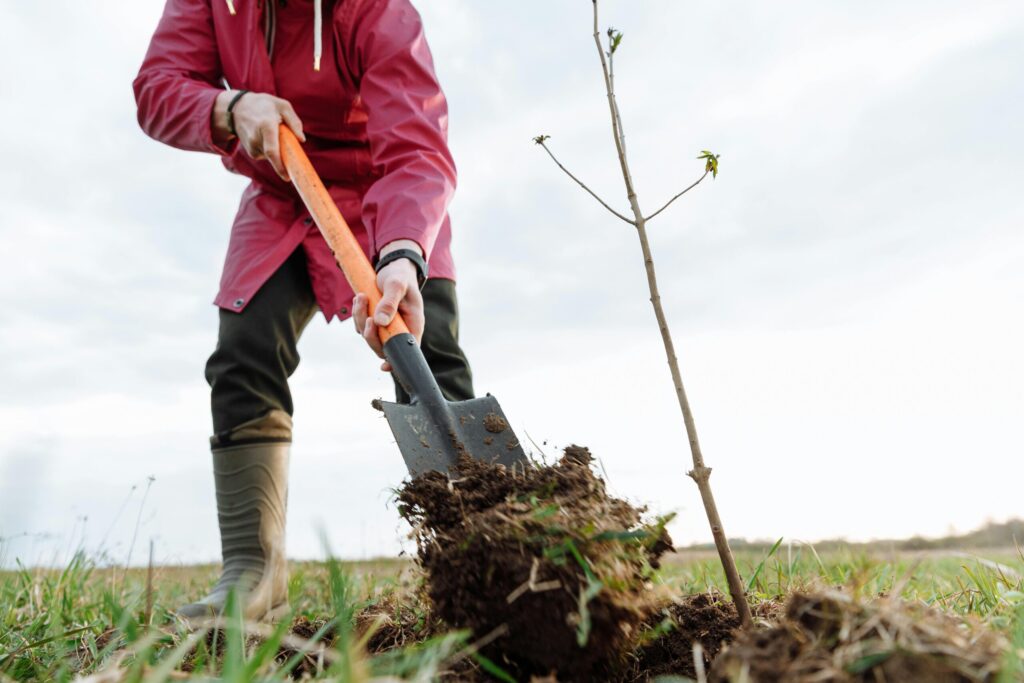
Dig your hole the same depth as the tree’s rootball, but three times as wide. Use a fork to loosen the soil around the sides of the hole to help dig.
Step 2: Soak and Check the Rootball
Soak the rootball before planting. You can stand the tree in a bucket of water to do this thoroughly. After soaking, remove the tree from its pot. Afterwards, gently loosen the roots so they’re not packed too tight; this will encourage the roots to grow outwards into the soil.
Step 3: Position Tree in the Hole and Cover It
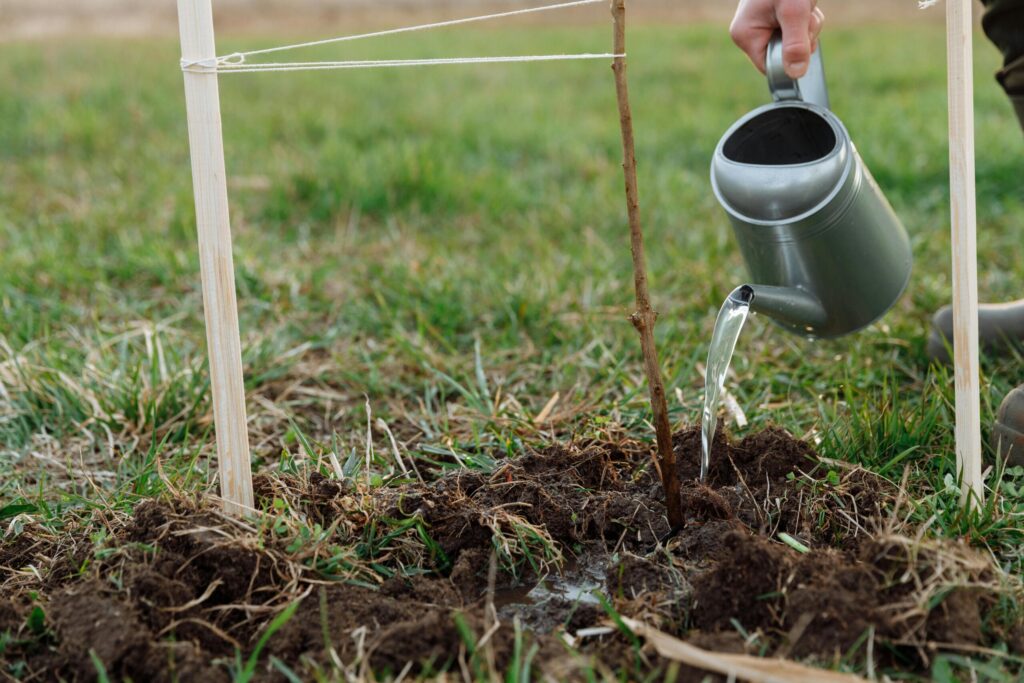
Put the rootball into the hole so that the surface of the ground is in line with the point where the roots meet the trunk. Turn the tree so that you’re happy with its positioning, considering how it will grow over the years. Refill the soil around the rootball and ensure there are no air pockets by firming the soil with the back of a spade.
Step 4: Cover with Mulch
Spread a layer of mulch over the surface of the soil. Mulch is organic matter such as chipped bark, rotten garden compost, manure, or gravel. Your layer should be about 5-8cm deep and feature a 10cm gap of mulch around the base of the trunk. This will protect the roots during cold seasons and hold moisture in the soil.
Step 5: Add a Tree Guard or Spiral, and a Sturdy Stake
Add a wooden stake at a 45-degree angle using a mallet, and then tie it to the trunk with a tree tie. You can add a tree guard or spiral before the stake to protect your tree against rabbits and other animals. Between the stake and tree guard, your tree will be sturdy and protected against the elements.
Professional Tree Planting Services with Broadleaf Tree Surgery
Our team specialises in the sourcing and planting of trees in commercial, residential, and public spaces. If you’re looking for tree planting services or just more advice, get in contact to organise a site visit and free consultation with our friendly team.
Tree Care After Planting
Trees need regular care after planting throughout their early years. Some key things you can do to care for your trees include:
- Water newly planted trees regularly for at least one to two years, particularly during dry seasons
- Make sure that your stake and tree tie are sturdy, and loosen the tie as the trunk grows. The stake and tie should stay in place for about two to three years to make sure that the tree is securely rooted
- Top up the layer of mulch to help contain moisture at least once a year
If you want to know more about how to care for your trees, check out our blog: How To Look After Your Trees | Your Questions Answered
The Best Time of Year to Plant a Tree
The best time of year to plant trees is between autumn and spring (November to February). You can plant trees any time of year, but they may need more attention after planting during hotter and drier seasons.
Make sure — when planting in autumn and winter — that the ground isn’t frozen, nor too wet. Excessively cold and wet conditions negatively impact the growth of roots, as they make accessing necessary nutrients more difficult for the tree, and also alter where roots can grow.
Where You Can Plant Trees in the UK
You can plant a tree in your own garden, as long as the roots and branches do not damage nearby properties. You cannot plant a tree on land you don’t own without permission.
If you are planting somewhere other than your own garden, remember that you also must not plant trees on:
- Archaeological sites
- Sites with rare or protected species
- Unploughed grassland
- Wetlands
- Heathland
Leaving these historical and ecological areas undisturbed can help maintain soil structure and lock carbon in the soil.
Leave Space Between Trees
Trees should be planted about 2 metres apart. Depending on the space you have and the type of tree, you could plant trees between 1 and 5 metres apart.
If you’re planting more than one tree, consider whether you’d like a more intentional look with straight rows or a more natural look with wavy lines.
Quality Tree Planting and Removal Services with Broadleaf
Broadleaf Tree Surgery is focused on delivering exceptional customer service, high-quality workmanship, and cost-effective rates for our tree services.
Request a quote or get in contact with Broadleaf Tree Surgery today for quality and professional tree care.
